
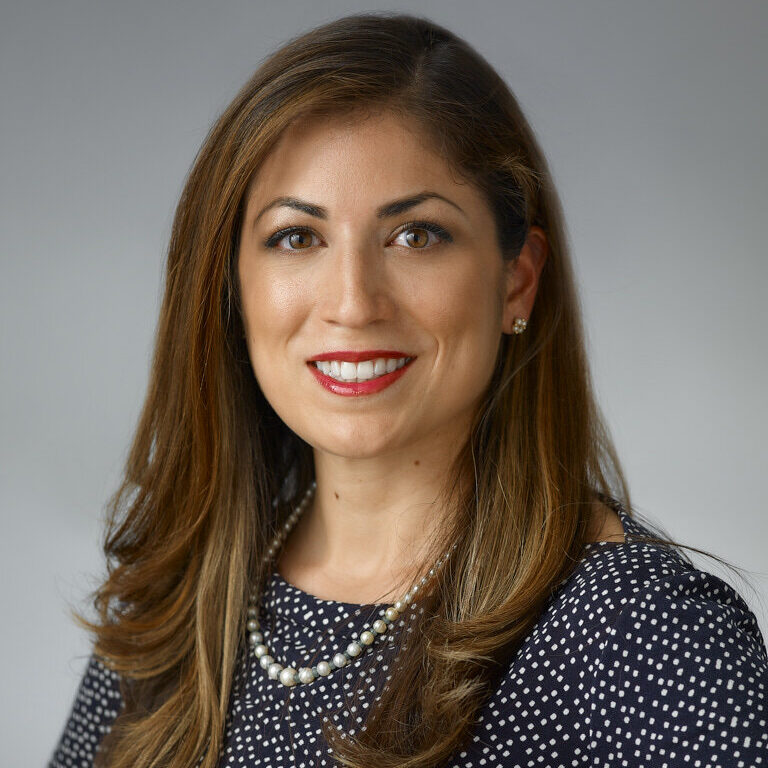
Mehreen brings more than 15 years of technical expertise providing governmental and non-governmental actors with needs assessments, community engagement, strategic guidance for project implementation, and training to improve public policy and programming.
As a Part-Time Faculty at George Washington University and previously an Adjunct Professor at Georgetown University’s School of Foreign Service, she offers graduate and undergraduate courses on “Conflict and Conflict Resolution,” “Community-Based Terrorism Prevention,” and “Women and Violent Extremism.”
Previously, from 2018-2025, Ms. Farooq served as the Governance Technical Expert at Counterpart International, a non-profit international development organization, where she supported multiple work streams across a diverse and wide-ranging portfolio of governance, food security and women’s empowerment programs, which cumulatively were worth over $200M.
From 2010-2018, Ms. Farooq served as the Vice President and Senior Fellow of the World Organization for Resource Development and Education (WORDE), where she led policy analysis, research, and programming to enhance the capacity of civil society organizations to promote peace and security. She led field-based research across South and Central Asia to identify drivers of conflict and opportunities for building strong, resilient communities.
Applying international lessons learned, she fostered a coalition of over 300 local non-profit organizations in Montgomery County, Maryland and established the first community-based public health effort to prevent radicalization to violent extremism.to build resilience against radicalization, known as the “Montgomery County, MD Model.”
Ms. Farooq has also worked with the University of Maryland’s Center for Health and Homeland Security and McGill University’s Institute for Health and Social Policy.
She received her Master of Arts in International Affairs from American University, Washington, D.C.

Bio coming soon.