
Global convening highlights evidence that prevention works, emerging threats including nihilistic violent extremism and AI, and new tools to help communities prevent hate-fueled violence
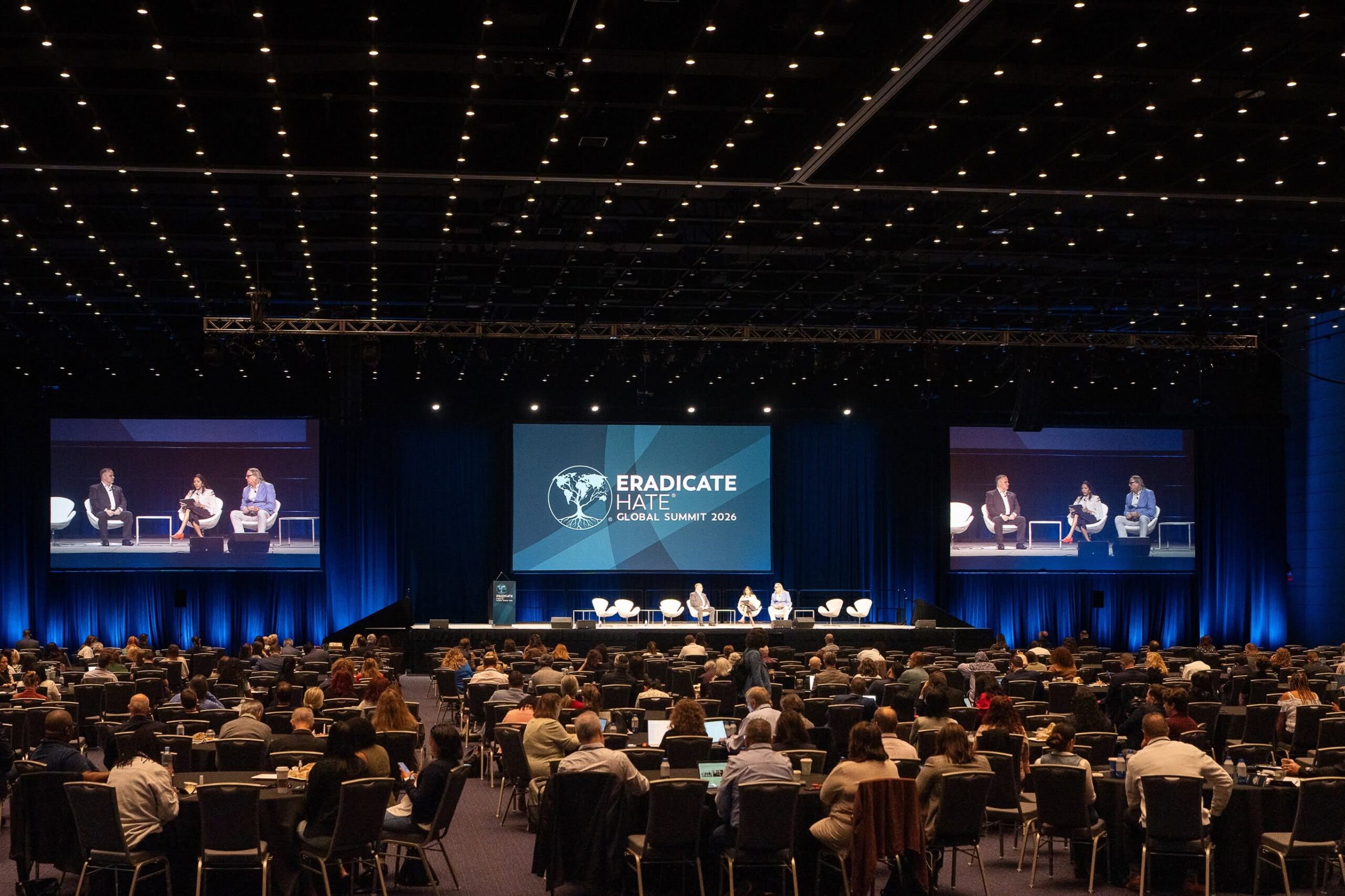
A new Reuters/Ipsos poll found that 33% of Americans identify domestic terrorism as the biggest threat to average Americans, even as organizations working to prevent targeted and hate-fueled violence lose federal support. Against that backdrop, more than 1,600 survivors, students, researchers, policymakers and frontline professionals gathered in Pittsburgh and online Sept. 15–17 for the sixth annual Eradicate Hate Global Summit to take on evolving threats, share evidence of what works and advance practical solutions to prevent hate-fueled violence and fill gaps.
“We know more than ever about preventing violence, what we need now is the resources to put that knowledge to work at scale,” said Brette Steele, president of Eradicate Hate. “Funding cuts have weakened organizations across the field just as the threats are becoming more complex. This Summit is about making sure that progress does not stall, that we bridge the gaps, and that prevention efforts endure.”
Eradicate Hate was founded after the Tree of Life synagogue attack by Pittsburgh leaders determined that the city be known for the strength of its response. Today, it connects people and organizations working around the world to prevent hate-fueled violence at the Global Summit, and sparks conversations and ideas that extend far beyond it – including through the Prevention Practitioners Network, which connects nearly 2,400 professionals nationwide, and the Reach Out Resource Hub to help people find local support if they are concerned they or someone they know is at risk of committing an act of hate-fueled violence. Sustaining that progress, however, increasingly depends on private philanthropy and nonprofit organizations following federal funding cuts that eliminated all Eradicate Hate’s federal funding and deeply affected other organizations across the sector.
The need to sustain that infrastructure was underscored by a keynote delivered at the Summit by Dr. Robert Pape, director of the University of Chicago Project on Security and Threats. His research showed that a significant minority of American adults expressed support for political violence against targets across the political spectrum. Pape called support for political violence the “combustible material” that can push volatile individuals toward committing an attack, but said the vast majority of Americans reject political violence—an untapped resource that prevention efforts must mobilize.
Offering a potential path forward, Dr. Garen Wintemute of the University of California, Davis presented new research from a nationally representative panel of more than 8,000 Americans showing that even among the small minority who said they might commit political violence, most believed they could be persuaded not to act. “Most say you could talk them out of it,” Wintemute said. About one-third identified family members as potentially effective messengers, 30% named friends and 20% cited respected community leaders.
Experts also called for stronger threat-reporting and support systems for public servants and extreme risk protection orders when an individual poses an imminent danger. “Help the helpers. Are we doing that as a society?” said Vermont State Representative Mary-Katherine Stone. “I encourage you to help the helpers.”
“Prevention isn’t a program, it’s a practice. It’s what we do every day,” said Nicole Hockley, co-founder and CEO of Sandy Hook Promise. “The goal isn’t to react better after a tragedy, it’s to stop tragedies from happening in the first place.”
Experts further discussed solutions to address the growth of nihilistic violence, how artificial intelligence can be used to help identify and interrupt threats, the response to the Bondi Beach massacre, online radicalization and the convergence of violent ideologies. At the Summit, Eradicate Hate working groups also unveiled practical tools and new resources for the field, including work from the Protecting the Protectors working group focused on supporting professionals working in violence prevention, a toolkit for police agencies on standards for hate crime investigations and reporting, resources for parents and educators about online threats, and more.
“Hate is a universal poison, one that poisons the hater,” said keynote speaker Dr. Alfred Garfinkle, a Holocaust survivor, physician, psychiatrist, and trauma expert. “We have to learn, and teach, to hate the action, but not the person.”
Other featured speakers included Brian Fishman of OpenAI; Van Jones, civil rights advocate, political commentator and founder of Dream Machine Innovation Lab; and Shari Redstone, founder of the Redstone Leadership Foundation, alongside survivors, practitioners, researchers and international experts.
“When people see each other as individuals – not as ideologies, not as governments, but as people – we begin to understand how much do we have in common,” said Redstone.
This week, Gonzaga University’s Center for the Study of Hate also announced that Eradicate Hate received the 2026 Eva Lassman “Take Action Against Hate” Award.
Eradicate Hate also presented its Bridge Builder Award to David Shapira, retired chairman and CEO of Giant Eagle. In commenting on Shapira’s selection for this honor, Mark Nordenberg, co-chair of Eradicate Hate’s board, said, “David is an exemplar of the values upon which Eradicate Hate has been built – kindness, compassion, empathy, and respect. He also has been a tireless and generous leader in the continuing quest to reduce hate-fueled violence.”
The Global Summit followed the Eradicate Hate Student Summit on Sept. 14, which brought together more than 650 students, educators and community partners from 43 schools across Southwestern Pennsylvania and beyond. Participating schools received $1,000 from the Grable Foundation and the Benedum Foundation to support student-led prevention projects during the coming year. Eradicate Hate also released a new Student Summit Playbook to help other communities replicate the model.
For access to Summit sessions, including Survivors in Action, Promise and Peril of AI and more, visit the session catalog. To request a transcript, email press@eradicatehatesummit.org. For more information, visit eradicatehatesummit.org or eradicatehate.org.
###
Eradicate Hate is a nonpartisan nonprofit that believes that everyone has a role to play in preventing hate-fueled violence. Rooted in the aftermath of the deadliest antisemitic attack in the United States, Eradicate Hate forges practical solutions to prevent all forms of hate-fueled violence. Through the annual Eradicate Hate Global Summit, Prevention Practitioners Network, UP End Hate, issue-specific working groups, and resources like the Reach Out Resource Hub, Eradicate Hate builds safer, more resilient communities for all. Learn more at www.eradicatehate.org.