
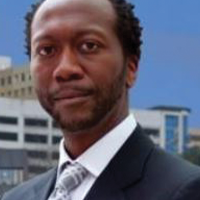
William M. Carter, Jr. is a Professor of Law at the University of Pittsburgh School of Law. He specializes in constitutional law, civil rights, race and the law, and civil litigation. An award-winning teacher, he has been selected as Professor of the Year by vote of the student body on four separate occasions.
Professor Carter is widely considered to be one of the leading experts on the Thirteenth Amendment and racial discrimination. His scholarship has been published in respected law journals such as the Columbia Law Review, the UCLA Law Review, the Texas Law Review, the Emory Law Journal, the Harvard Civil Rights-Civil Liberties Law Review, and in books published by the Oxford University Press and the Columbia University Press. His scholarly work has been cited by the U.S. Courts of Appeals for the Second and Tenth Circuits, in amicus briefs filed by the NAACP Legal Defense & Educational Fund and by the Harvard Law School’s Criminal Justice Institute, and in the work of leading scholars published in the Yale Law Review, the Yale Journal of International Law, the Virginia Law Review, the Columbia Law Review, and the Oxford University Press. He has delivered lectures at Harvard, Columbia, NYU, Cornell, UCLA, Georgetown, and the Sorbonne in Paris, France.
Professor Carter received his J.D., magna cum laude and Order of the Coif, from the Case Western Reserve University School of Law. Upon graduation from law school, he worked as a litigation associate in the Washington, D.C. offices of Squire, Sanders & Dempsey and Ropes & Gray. From 2001-2007, he was a Professor of Law at the Case Western Reserve University Law School. From 2007-2012, he was a Professor of Law at the Temple University Beasley School of Law. He served as Dean of the University of Pittsburgh School of Law from 2012-2018.

The Summit unites the public and private sectors, domestic and international, against hate and extremism. Researchers, activists, lawyers, technology experts, political leaders, and more come together, each bringing their unique tools to the fight. Important relationships that were established at the Summit in 2021 have carried forward into working groups with concrete deliverables for 2022 and beyond.